
In Your Blood.
Sacrificing Creativity
In 2009, I embarked on the journey of running a tech business. Whist it was exciting to become a founder, it demanded sacrifices—most notably, my passions for screenwriting and DJing.
As I transitioned, I recall a pivotal moment when a film producer optioned one of my stories. The opportunity to write the screenplay was within reach, but time was not. Choosing the business meant sidelining my creative endeavours, leading to a huge of loss. But I couldn’t tell as the business was one large distraction for more than a decade.
The All-Consuming Nature of Entrepreneurship
Diving into the entrepreneurial world, I underestimated the totality with which it would consume my life. The early days were marked by isolation from friends and the financial constraints typical of bootstrapped startups—a stark contrast to the flexibility of my previous freelance career.
Music, once a vibrant part of my life, gradually faded. I stopped DJing, ceased exploring new tracks, and found myself disconnected from the evolving music scene. This stagnation mirrored my internal state, as I became increasingly detached from my creative identity.
The Physical Toll of Stress
As the business grew, so did the stress, manifesting in alarming physical symptoms over the years:
- Heart palpitations
- Hospital visits for ECGs
- Mini-strokes (!)
- A blood disorder
All is ok now, But These were clear signals from my body, highlighting the profound impact of work-related stress because my tech work suited me as it’s creative, but setting up and scaling a business was a challenge. A step too far.
But like most founders, I didn’t listen to my body.
Remember: Work-related stress is a significant contributor to health issues, with increased levels associated with higher rates of heart attacks, hypertension, and other health problems. stress.org
Losing and Rediscovering Identity
The crux of the issue was a loss of identity. Fulfilment came from creating—in tech, music, or writing. Transitioning from creative roles to managerial responsibilities left me struggling. My Kolbe A score of 2-2-9-5 reflects a fast, risk-taking creator who thrives on innovation but grapples with structure and management.
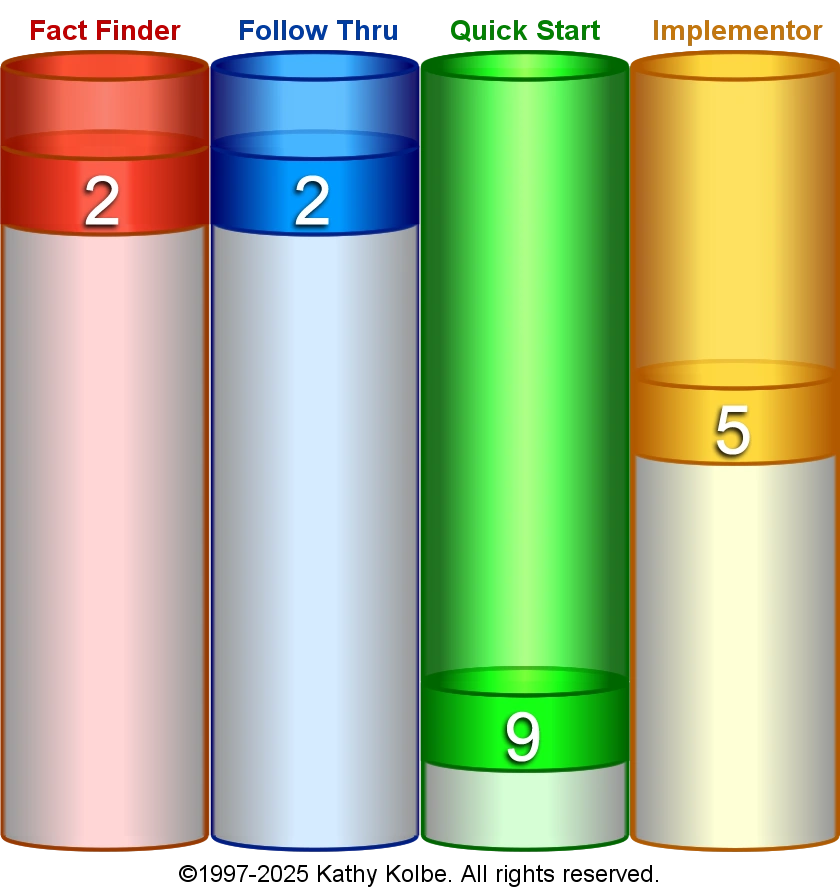
The role continues to demand innovation and risk-taking which I am fine with but also structured management, especially of people and processes—a challenging combination. Early in my career, I had a tendency to people-please further complicated matters, potentially fostering toxic environments due to unclear boundaries.
Over the past five years, I’ve been reintroducing music into my life. Plus, I’ve worked with my CEO coach, Drasko, to address people-pleasing tendencies over the past 18 months. We’ve reshaped the business to align with my strengths, focusing on creative roles in tech, writing, and music rather than scaling—taking a lot of pressure off whilst increasing personal satisfaction.
Remember: Approximately 76% of U.S. workers reported experiencing at least one symptom of a mental health condition, with 84% attributing these challenges to workplace conditions. hhs.gov But this issue isn’t the work. It’s your choice of work. A subtle but important difference.
The Data Speaks for Itself
Throughout my business journey, high blood pressure was a constant companion. However, over the past 18 months, as I’ve realigned my work with my creative identity, my happiness has soared, and my blood pressure has normalised—without medication.
And now I have data to back it up.
I used a 24-hour blood pressure monitor, which is a wearable and impressive tech. Yet, as seen in these images, I was consistently elevated for years:

But since bringing music and writing back into my life—since reclaiming my real identity—my blood pressure has normalised. And this happened without medication.

I never expected to have hard data proving this point, but the transformation speaks for itself.
The Takeaway
Never lose your identity. If you’re an artist, embrace it fully. Stepping into your authentic self isn’t just a personal responsibility; it’s essential for your well-being. The transformation I’ve experienced stands as a testament to the power of aligning work with one’s true identity.
Never lose your identity. If you’re an artist, be an artist. It’s your responsibility to step into that role fully.
I was trapped in the founder / CEO role, and it took professional help and a lot of time to escape the ‘trap’ and reclaim my artistic identity and ambitions.
If you have similar concerns, always happy to have a no-obligation discussion.

No Comments